
10Jun

Ward Williams Continuity Plan

The spread of the Coronavirus (COVID-19) continuing to dominate the news, with major implications for public health and the NHS. It is also causing economic disruption and we want to reassure you we have put in place sensible measures to ensure that Ward Williams is well prepared and would like to share our continuity plan of how we can continue to provide our services.

So, we’d like to explain what we’re doing to keep you safe and for the business to be able to run efficiently. We would like to make you aware of the below points:

Remote working & returning to the workplace

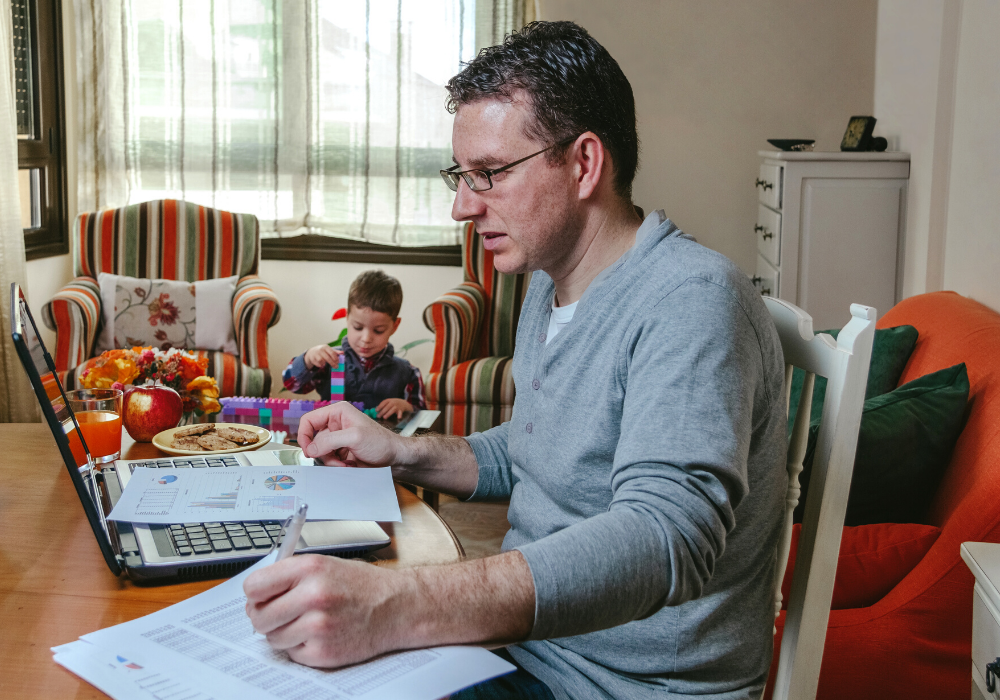
The majority of Ward Williams staff will continue to work remotely. We already operate an agile working policy, which means our staff have the ability to work from home and can access our systems in a secure IT environment.

We have received a couple of requests from staff to return to the workplace for personal reasons. Ward Williams recognises that our organisation needs to offer our staff a safe environment in order to return to the office.  Therefore, in response, we have set up a COVI19 taskforce to manage weekly office risk assessments and the health and safety of all staff within the workplace.

If you would like more information on these measures, please email: covid19@wardwilliams.co.uk.

Access to office & meetings


  • If you need to drop off or collect records please contact your usual Ward Williams contact and we will make arrangements.
  • Due to the limited access to the office, we would like to make you aware we have video conferencing facilities should you wish to make alternative arrangements to meetings.
  • Please try to avoid sending cheques, instead you can make payments over the phone (01932 830 664) / BACS.
  • We will assume unless we hear from you we have permission to open and scan your post. This will avoid any delay in the receipt of private post.

Your office contact will remain the same and will operate usual office hours and will be fully contactable by telephone and email.

Government assistance for individuals and businesses

Ward Williams have put together a dedicated website area for all the information you need on the latest individual and business support there is available from the government.  Please visit Coronavirus Business Updates for more information.

If you have any comments or questions. Please do not hesitate to get in contact with a member of Ward Williams HR.


 

04Jun

Tax-Free Childcare during coronavirus.

Temporary changes have been made to the eligibility criteria for Tax-Free Childcare and 30 hours free childcare, during coronavirus.

The changes may affect you if you, or someone you live with, are:

  • on furlough
  • not able to work or you’re working less
  • self-employed
  • a critical worker

If you’re on furlough

You should apply, or reconfirm if you already have a childcare account, if your wage, and your partner’s wage if you have one, is:

  • at least the National Minimum Wage for 16 hours a week.
  • below the normal minimum income requirement, but you’d normally expect to meet the income requirement.

If you’re not able to work or you’re working less

You should apply or reconfirm if you already have a childcare account if you’re:

  • getting sick pay or statutory sick pay (SSP) – time spent on sick pay or SSP will count as working and meeting the minimum income requirement
  • taking unpaid leave to care for others, such as your children – if you expect your income to meet the minimum income requirement (at least the National Minimum Wage for 16 hours a week) after coronavirus
  • living with someone who has coronavirus – you must stay at home – if you expect your income to meet the minimum income agreement (at least the National Minimum Wage for 16 hours a week) after coronavirus
  • working less, your hours have been reduced and your wage:
    • meets the minimum earnings requirement
    • is below the normal minimum earnings requirement but you would normally expect to earn above it

If you’re made redundant

If you’re made redundant you’re not eligible to apply or reconfirm you have a childcare account because you’re:

  • no longer in work
  • not meeting the minimum income requirement

However if you start employment again and expect to earn above the minimum income requirement you can apply 31 days before you start your new job.

If you’re self-employed

You should apply or reconfirm if you already have a childcare account if you are:

  • continuing to work, and your earnings:
  • are above the minimum earnings requirement
  • are below the normal minimum earnings requirement but you would normally expect to earn above it
  • not able to get work because of coronavirus:
  • you may be eligible to claim a grant through the Self-Employment Income Support Scheme – payments made to you through the scheme will count as earnings
  • and you’re not eligible for self-employed income support but would expect to earn at least the minimum income requirement

If you’re claiming Universal Credit

If you are now claiming Universal Credit and were getting:

  • Tax-Free Childcare, you cannot apply or reconfirm for Tax-Free Childcare – if you stop claiming Universal Credit you can apply for Tax-Free Childcare again
  • 30 hours free childcare, and you meet the revised minimum income requirement or would expect to normally, you should apply or reconfirm if you already have a childcare account

Have you missed the 31 March deadline

If you’ve missed the application or reconfirmation deadline for 30 hours free childcare, you should apply or reconfirm if you already have a childcare account.

Local authorities will be able to extend the validity dates on 30 hours codes for eligible critical worker parents during the summer term.

02Jun

Return to work: Is it mutually agreed?

Before employers allow their employee to return to work. We’ve put together this flow chart so see if your ready.


**DISCLAIMER: The flow chart provided to download is for general information purposes and do not constitute legal or other professional advice. While the information is considered to be true and correct at the date of publication, changes in circumstances may impact the accuracy and validity of the information. The Ward Williams HR is not responsible for any errors or omissions, or for any action or decision taken as a result of using the guidance. You should consult a professional adviser for legal or other advice where appropriate.

Ward Williams HR can support with the following return to work documentation:


  • Signed letter of consent
  • Risk assessment
  • Policy & procedure

If you would like more information on this and costs please get in touch with Sally Phillips MD of Ward Williams HR on sally.phillips@wardwilliams.co.uk or call 01932 830662


20May

Annual leave and temp holiday policy

The government introduced a temporary new law allowing employees and workers to carry over up to 4 weeks paid annual leave over a 2 year period. This law was brought in to support key industries where employees are unable to take their holiday due to COVID-19.

This law applies for any holiday an employee does not take because of the Coronavirus, for example if they are self-isolating or too sick to take holiday before the end for their leave year. This also applies to employees that have been temporarily sent home as there is no work and put on furlough. In addition this also applies if an employee has had to continue working and does not have the opportunity to take holiday.

However, all employees are still encouraged to take their full annual leave entitlement each year. You can find out more information on holiday here.

Should you require specific advice on any question on annual leave please do get in contact with Sally Phillips, the MD of Ward Williams HR Limited. Tel 01932 830664. Email sally.phillips@wardwilliams.co.uk.


13May

Government’s Covid-19 Strategy

Updated 13th May 2020

The government has published OUR PLAN TO REBUILD:The UK Government’s COVID-19 recovery strategy, setting out its roadmap to bring the UK out of Covid-19 lockdown.

The proposals on work are set out and take effect from today. They state:-

“For the foreseeable future, workers should continue to work from home rather than their normal physical workplace, wherever possible.”

“This will help minimise the number of social contacts across the country and therefore keep transmissions as low as possible. All those who work are contributing taxes that help pay for the healthcare provision on which the UK relies.”

“People who are able to work at home make it possible for people who have to attend work places in person to do so while minimising the risk of overcrowding on transport and in public places.”

“All workers who cannot work from home should travel to work if their workplace is open. Sectors of the economy that are allowed to be open should be open, for example, this includes food production, construction, manufacturing, logistics, distribution and scientific research in laboratories. The only exceptions to this are those workplaces such as hospitality and non-essential retail which during this first step the Government is requiring to remain closed.”

“It remains the case that anyone who has symptoms, however mild, or is in a household where someone has symptoms, should not leave their house to go to work. Those people should self-isolate, as should those in their households.”

“As soon as practicable, workplaces should follow the new “COVID-19 Secure” guidelines…which will be published this week…”

Whilst we wait for the guidelines to be published its worthwhile giving due consideration to the following:

  • If working from home demonstrates and operates as business as usual then continue to do so.   Don’t rush back.
  • Reach out to employees and ask for their thoughts on returning to work.  There will be those who will want more of a daily routine, and those that will feel more secure working from home.
  • Operate a ‘staggered approach’ whereby employees can return to the office over an agreed period.  Alternating daily changes will prove risky and time consuming, so not recommended
  • Ensure that the office has a deep clean before reopening.
  • Carry out a risk assessment on the office and consider how you can continue with operating social distancing whilst in the workplace.

Implement strict policies outlining employers and employees responsibilities such as but not limited to:

  • Antibac dispensers to be available for use on entering and exiting the premises.
  • Provide safety equipment/clothing such as face protection, gloves etc.
  • Where possible provide an internal and separate external gateway to enter and exit the building.
  • Limit the number of employees at any one time using breakout areas such as kitchens.
  • The sanitisation of white goods and work surfaces in the kitchen after each separate use.
  • All company equipment such as laptops computers keyboards mobile phones to be cleaned at the start and end of every day.
  • Reception desk areas to be screened in order to protect employees and visitors

Should you require specific advice on any question please do get in contact with Sally Phillips, the MD of Ward Williams HR Limited. Tel 01932 830664. Email sally.phillips@wardwilliams.co.uk.

12May

Furlough scheme extended to end of October

Updated 12th May 2020

Today, Rishi Sunak has announced the Coronavirus Job Retention Scheme will be extended for a further four months, until the end of October 2020.

Until the end of July, there are will be no changes.

From August to October the scheme will continue, for all sectors and regions of the UK, but with greater flexibility to support the transition back to work. Employers currently using the scheme will be able to bring furloughed employees back part-time.

The government will ask employers to start sharing, with the government, the costs of paying people’s salaries.

Full details will be published by the end of May.

If you have any questions or require any further information. Please get in touch with Sally on 01932 830664 or email sally.phillips@wardwilliams.co.uk.

04May

Returning to the workplace

Updated 4th May 2020


With many people returning to the workplace. In addition, the current Coronavirus Job Retention Scheme (CJRS) is due to end on 30 June 2020, and so organisations need to start thinking about what happens next.

As the timing and nature of any relaxation of restrictions is uncertain, it would be sensible for businesses to consider all the options and have the capability to move quickly from one scenario to another.


Returning to the workplace

How to manage returning to the workplace will depend on the type of closure arrangements you have been operating. The three most prevalent types are:


  1. Business not trading at all (all staff furloughed)
  2. Business trading on a limited basis (some staff furloughed, some working from home or in company premises) or where only ‘essential’ workers are currently in work
  3. Business trading fully but all staff working from home.

Whichever of these is closest to your individual business, there are some common issues you will need to address:


  • It seems highly likely that there will be a requirement for some form of social distancing for some time to come. Lockdown restrictions will likely be lifted incrementally, and all staff who can work from home will be expected to carry on doing so. Where certain groups of employees or businesses are part of a sectoral return to the workplace, employers will need to consider detailed risk management approaches to safeguard their health and minimise the risk of infection.
  • It is likely that more large-scale testing for COVID-19 infection will form a key part of facilitating a safe return to the workplace for larger numbers of employees. This could form an extension of the current framework for the testing of essential workers and members of their household, and will mean every employer implementing a systematic approach for their workforce.
  • The risks to people’s health from this pandemic are psychological as well as physical. These include anxiety about the ongoing health crisis and fear of infection, as well as social isolation due to the lockdown. Many will have experienced challenging domestic situations, such as juggling childcare or caring for a vulnerable relative, as well as financial worries if a partner has lost their income. Some will have experienced illness, or bereavement. Even if staff have carried on working and participating in video meetings, they will still need to adjust to working in a shared environment with colleagues. Some may take more time than others may and it is likely that most people will need a period of readjustment. Many may find that they are still coming to terms with the significant change which society has seen, and the familiar workplace routines could feel very different
  • Finally, it will be important for every employer to ensure that the organisation culture is inclusive, and that every employee feels they are returning to the workplace in a supportive and caring environment. The pandemic has had an unequal impact across the workforce in many ways, as different groups of employees, and individuals, will have been affected in diverse ways according to their job role and individual circumstances. Some organisations will have people who have been furloughed on 80% or 100% pay, for example, while others may have continued to work or even had increased workloads. The uneven nature of people’s work and personal experiences and the challenging nature of the lockdown and ongoing situation, means there could be potential for some negative feelings creeping into the employment relations climate. Therefore, it is important that the organisation fosters an inclusive working environment, and managers are sensitive to any underlying tensions and confident about nipping potential conflict in the bud.

You will need to review the workplace and consider:


  • Can staff maintain a 2m physical distance between each other?
  • How will you manage meetings, interviews and other interactions?
  • What about communal areas such as canteens or kitchen areas?
  • How can you implement resourcing strategies to support physical distancing such as ‘cohorting’ (i.e. keeping teams of workers working together and as small as possible), or staggering working hours so that not all staff are in at the same time?
  • Depending on your working environment, you may need to consider providing additional PPE, including gloves, masks or anti-viral hand gel.
  • If your premises have been closed for a period of time, you should carry out a deep clean before you reopen. You should therefore review your cleaning arrangements, for example ensuring all phones/keyboards etc. are wiped daily with anti-viral cleaner.


Legal considerations

There will also be a number of employment law and administrative issues that need to be covered:


  • Ward Williams advice throughout has been that you should seek written agreement with staff to be furloughed. Even if you put in a clause allowing for an immediate recall, you should still give staff a reasonable period of notice before returning to the workplace. This is particularly important given that many people will have additional childcare or other responsibilities, which they may need to, make arrangements to manage.
  • You’ll need to ensure that your payroll staff or provider are aware that furlough has ended for these staff and they should return to full pay (taking into account the national minimum and living wage rates increases from April for any staff employed on those rates).
  • What criteria will you use to recall staff? Will it be simply business need? Will you consider individual personal circumstances? Remember not to use discriminatory criteria; be fair and inclusive and keep in mind your organisational values and any diversity and inclusion aims.


Short term working/Redundancy

When the government furlough scheme ends, your business may still not need to bring its entire existing workforce back. In this case, you have essentially three options:


  • Agree reduced working hours with some or all staff
  • Furlough staff for a further period, at your own expense
  • Consider redundancies.


Reduced working hours

If your business has work for its entire staff, but not at the level before restrictions, you may want to consider asking staff to reduce their working hours on a temporary basis. As with furlough, because this will be a temporary contractual change, people will need to agree in writing. It is legally possible to impose a change but this is a complex and time-consuming approach, which may undermine  goodwill with employees, so should be weighed carefully and following proper legal advice.

The hope is that the government will amend the CJRS to allow staff to return to work on a phased basis.


Further furlough

If the CJRS ends as currently scheduled on 30 June, that may not necessarily fit in with your own business timescale. It may be that you would prefer to keep some staff furloughed for a further period as you implement a phased return to normal working.

If your furlough letter to individual employees did not include a specific end date, then you can continue to keep staff furloughed on the same terms as the CJRS, although your business would need to bear the full cost of their 80% payment and other employment costs. It would be sensible to write to employees to explain that you are continuing furlough for them (with an estimate of how long for if you can give it) as many will expect the end of the government scheme to mean a return to more normal working.

If your furlough letter did include an end date or linked furlough to the CJRS, you will need to seek further agreement from staff to continue being furloughed. Again, you will bear any employment costs and it would be sensible to give an estimate of how long the further period is likely to be.


Redundancies

Your business may not be able to continue trading, or you may only have enough business to require significantly fewer staff. In such a situation, the end of the CJRS may require you to make redundancies. While you need to follow the correct legal process take, any steps you can to support employees through this process. Redundancy will be a crushing blow to many people, at a time when they have been through a very challenging time – be very mindful of how you communicate, continue to support them and treat their health and welfare as a priority.

If you are looking to carry out redundancies, please get in contact with Ward Williams HR as we can ensure the correct process is followed.


Dealing with other groups of staff

Since not all restrictions will be lifted at the same time, there are some other issues that you will need to consider:


  1. Staff who are advised to shield or self-isolate
  2. Staff who have suffered a bereavement
  3. Managing holidays after the return.

Some of your staff may still be required to shield (currently for 12 weeks) because they are ‘extremely vulnerable’ and at particular risk from COVID-19 infection. Others may be very concerned because they live or care for someone who is classed as high risk. If individuals are still shielding as restrictions begin to be lifted, or the CJRS ends, you should:


  • allow them to continue to work from home
  • if this is not possible, look at other options to retain them such as a further furlough period.

While deaths from COVID-19 are still comparatively rare, it is possible you will have employees who have suffered the bereavement of a partner or other family member. You should be sympathetic to requests for additional time off during this period, and if you can, we recommend that you pay normal pay.

In very rare cases, you may have an employee who has died from COVID-19. You will need to support their colleagues and again, signpost staff to any mental health support you offer.

Staff are now allowed to carry forward some of their statutory holidays if they are unable to take them in the current leave year.


  • Encourage staff to take previously agreed holiday dates – even if working from home, people still need time away from work.
  • Have a clear policy to allow as many people as possible to take leave this year while still maintaining key business services – perhaps relaxing normal rules around maximum numbers allowed off at once.


Conclusion

Changes to the current lockdown restrictions are likely to be slow and gradual. They are also likely to fluctuate, and stricter measures imposed, possibly with very little notice. While we do not know yet what the specific steps will be taken to start to lift the lockdown, there are certain principles and measures that every employer will need to consider. Organisations therefore need to use this time to prepare and plan their next steps when getting staff returning to the workplace safely.

Should you require specific advice on any question please do get in contact with Sally Phillips, the MD of Ward Williams HR Limited. Tel 01932 830664. Email sally.phillips@wardwilliams.co.uk.


21Apr

Claim online CJRS

CJRS calculator and latest guidance from HMRC

20 April: As the Coronavirus Job Retention Scheme (CJRS) opens, HMRC launches its calculator tool to help businesses work out how much they can claim online for.

Ahead of the CJRS portal opening today, HMRC launched its claim online / calculator tool to help firms identify the level of grant they are entitled too through the scheme.

HMRC confirms the calculator is aimed at organisations with a ‘small number of employees’ and will help them to work out the figures they will need to complete an online CJRS.

The calculator comes three days after HMRC issued a wave of guidance. Alongside updates to its key guidance for employers and employees, HMRC published specific information to help employers work out how much they could claim and a downloadable step-by-step guide that outlines: what to consider before making a claim, how to calculate a claim, how to make a claim and what to do afterwards.

HMRC guidance for employers:


HMRC guidance for employees


If you have concerns or questions, please contact us on 01932 830664 or a member of the HR team. As further details are announced, we will keep you informed.


15Apr

Changes to Furlough updated 15th April 2020

Updated 15th April 2020

HMRC has just published the fourth iteration of the Coronavirus Job Retention Scheme. The qualifying date, when the employee has to have been on the employer’s payroll, has changed from 28 February to 19 March 2020.

New legislation is due to be published this evening and tomorrow. If there are any further changes, we will let you know.

If you have any urgent questions. Please get in touch with a member of the Ward Williams HR team on 01932 830664 or email Sally on sally.phillips@wardwilliams.co.uk.

07Apr

New information on the Job Retention Scheme.

HMRC has released over the weekend new information on the Coronavirus Job Retention Scheme (JRS). This provides points of clarification and include:


  • An employer can claim for any regular payments it is obliged to pay its employees. This includes wages, past overtime, fees and compulsory commission payments. However, discretionary bonus (including tips) and commission payments and non-cash payments should be excluded. By “obliged” we interpret this to mean a contractual right. This is good news for those employees whose bulk of their wage is commission based.
  • However the reference salary should not include the cost of non-monetary benefits provided to employees, including taxable Benefits in Kind. Similarly, benefits provided through salary sacrifice schemes (including pension contributions) that reduce an employee’s taxable pay should also not be included in the reference salary. Where the employer provides benefits to furloughed employees, this should be in addition to the wages that must be paid under the terms of the Job Retention Scheme. (Note: Normally, an employee cannot switch freely out of a salary sacrifice scheme unless there is a life event. HMRC agrees that COVID-19 counts as a life event that could warrant changes to salary sacrifice arrangements, if the relevant employment contract is updated accordingly).
  • Employees can be furloughed multiple times, i.e. they can be furloughed, brought back to work, then re-furloughed (subject to each furlough period being at least three weeks)
  • Employees can start a new job when on furlough (meaning they might end up earning 80% of the old salary and 100% of a new one).  This was not prohibited in the earlier guidance, but the new guidance expressly allows it.  The guidance does say it has to be allowed under the current employment contract, but presumably the existing employer can waive that should it choose to do so.
  • A clear audit trail MUST be in place, demonstrating each employee within the company has given written consent to their employer to agree to be furloughed. All companies in the scheme will have to ensure that all furlough documentation remains available for a period of 5 years following the end of the scheme.

While we already know that directors could be furloughed there is further explanation on this point although we are no clearer on what  ‘statutory duties’ actually cover for company directors?

Whether employees can be required to take annual leave when on furlough also remains un-answer, although many employers may consider this as a technical question they do not need answered.

It is anticipated that HMRC will carry out investigations on the take up of  the JRS and will potentially focus on the SME sector.

HMRC will no doubt have the power to issue significant penalties as a result of non-compliance.

Finally it is interesting to note that HMRC state furloughed employees should be “encouraged to undertake training”.

The full guidance can be found here.

If you have concerns or questions, please contact us on 01932 830664 or a member of the Ward Williams HR team. As further details are announced, we will keep you informed.