
05Jul

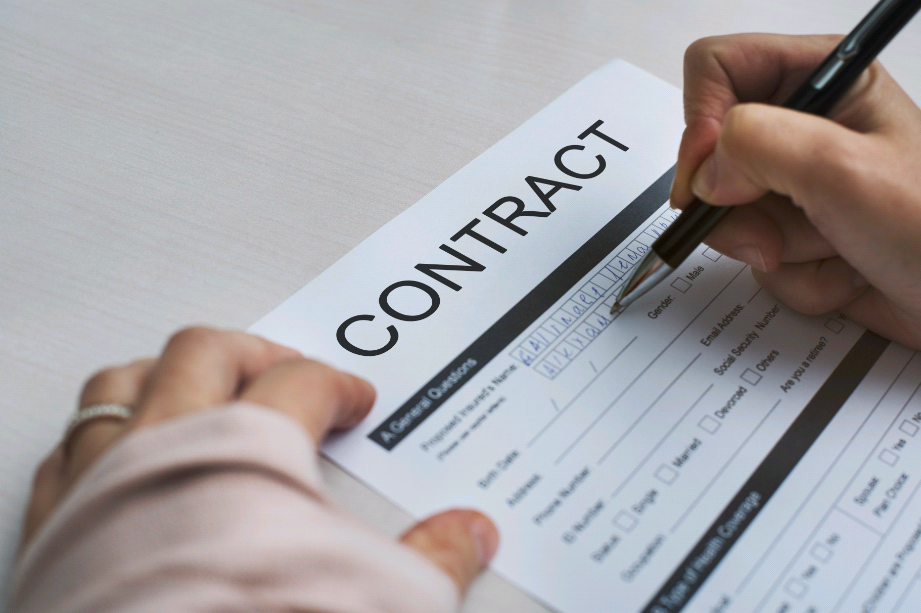
Why do we need employment contracts?

What can Love Island teach us about Employment Contracts?

Love it or hate it, Love Island is a hot topic for discussion, but what can we learn from it?

It has been revealed that one eager contestant left her job without notice before jetting off to take part in the show.  Leaving the employer in the lurch and in the predicament of having to find a replacement at very short notice. It has since been reported that the Company is seeking damages.

So what can this teach us?

It isn’t just employees who are protected under contract, it is the business too! Which is why it is so important to have the paperwork in place, which at the very least confirms the statutory requirements for notice.

If an individual fails to provide their employer with enough notice then it could be deemed as breach of contract. An employer could then take a number of steps, including seeking remedy through the courts who could award for any losses incurred as a result of the breach, but this is undoubtedly going to cost you in terms of time and money. It is important to weigh up the probability of success, versus the time and financial burden and loss.

In any event whether it is to raise, defend, or avoid a dispute, the best thing any business can do is ensure they have water tight contracts with an accompanying Employee Handbook that contains clear policies and procedures which are transparent in explaining expectations, what constitutes a breach, and what the consequences are.

Without these documents, your business simply isn’t protected. At Ward Williams HR we have all the experience and expertise you need in ensuring your documents are compliant. If you need help in this area, get in touch with Kim on 01932 830664 kim.dalton@wardwilliams.co.uk


 

28Jun

Dealing with summer in the workplace

With temperatures soaring and the sun expected to stick around for the foreseeable (fingers crossed!), individuals might start to test the boundaries and normal rules for work place attire…

What can you do to ensure your staff come to work in clothing that helps them keep cool, but is appropriate, especially in those client facing roles?

Do you even have a dress code policy that you can rely on for reinforcing the rules? If you do, does it really match your company culture? There isn’t really a one size fits all policy anymore, so it might be time to update you Handbook.

There’s also health and safety factors to consider, so it is important to use your discretion during periods of hot weather.

At Ward Williams HR we can help you with all of the above. For further information please get in touch on 01932 830664 or email kim.dalton@wardwilliams.co.uk


12Jun

World Cup fever in the workplace

With the world cup kicking off imminently, many of the 64 games will be played during normal office hours when many employees will be keen to watch. This can have an adverse impact on productivity and cause an increase in unauthorised absences, lateness, last minute holiday requests  and prompt a lack of interest in the working day and commitments.

In order to limit disruption, you might want to consider steps you can take to allow your staff to enjoy the buzz of the tournament, whilst still being able to fulfil operational requirements.

This might be considering and responding fairly to absence requests that come in at the last minute, or allowing shorter lunch breaks to help individuals make up time for a slightly earlier finish. What about providing a TV in a kitchen or break out area that is permitted to be on during lunch breaks?

That said, with an ever growing multi-cultural and diverse work force, not everyone is going to be supporting or wanting to watch the same teams, so if you are considering offering to allow staff to watch any of the matches, you need to make sure you are inclusive and fair.

If you think this is something we can help with and advise on, get in touch with a member of the team 01932 830 664 or email kim.dalton@wardwilliams.co.uk

29May

Employee Engagement

Employee engagement is something that can be difficult to measure, but in reality it can have a huge impact on the profitability of a business. The onus is on you to create an environment an individual wants to be in.

Disengagement effects absenteeism and staff turnover, which in turn has a massive impact on things like training costs, recruitment fees and time.

You need to get your company culture right and establish trends and indicators. Poor moral can come at a cost, and if you take the time to boost it and invest in your staff you will see the effect this has on your bottom line.

At WWHR we have the expertise to guide you to look at the bigger picture and take note of people’s mood, relationships, aspirations and feelings.

We all expect a lot from our staff, but there is mutuality of obligation and the balance of give and take it important. What do you offer your team? We’re not just talking monetary.

Listen to your staff, provide a suggestion box, open the channels of communication.

Need some help? Get in touch with a member of the team 01932 830 664 or email kim.dalton@wardwilliams.co.uk


03May

Changes to national minimum wage

As a business, you must ensure that workers are being paid at least the national minimum wage that applies to them, and we have seen an increase in minimum wage rates as of April 2018.

The National living wage for workers over the age of 25 increased to £7.83.

We also saw an increase to the minimum wage for workers ages 21 – 24 to£7.38, and to £5.90 for workers ages 18-20.

Taking into account compulsory school age, workers aged 18-20 must now be paid a minimum of £4.20.

You must ensure you keep a clear audit record to evidence you are meeting these statutory minimum requirements. If your pay is annualised, and individuals do regular overtime or work additional hours you could be falling fowl of these regulations, whilst also risking a breach of the working time regulations, particular for younger members of your work force who are protected by stricter rules.

Author: Kim Dalton HR Officer

For more information, please contact kim.dalton@wardwilliams.co.uk

19Apr

Employment Tribunal award limits

The compensation limits awarded at Employment Tribunal increased on 6th April 2018. These increases are much higher than we have seen in previous years, so the importance of getting your process right is more paramount than ever.

The new rates are:

  1. Statutory cap for the compensatory award for unfair dismissal increases to £83,682 or 1 year salary (gross), whichever is lowest.
  2. The statutory cap on a week’s pay for calculating the basic award for unfair dismissal and redundancy pay increases to £508
  3. The minimum basic award for unfair dismissal by virtue of health and safety increases to £6,203
  4. Guaranteed pay will increase to £28 per day
  5. Award for unlawful inducement relating to trade union membership or collective bargaining increases to £4,059

These  new rates come into effect in line with the date of the cause of claim, i.e if an individual is claiming unfair dismissal prior to 6th April, then the old rates will be used and still apply

As CIPD professionals, the team at WWHR can advise you on the impact these changes may have, or provide support to ensure you don’t face a claim! For more information, get in touch.

Author: Kim Dalton HR Officer

For more information, please contact kim.dalton@wardwilliams.co.uk

13Apr

GDPR- Are you ready?

Despite Brexit, the UK will be implementing the General Data Protection Regulations (GDPR) on the 25th May 2018.

The rules apply to all companies processing personal data and introduce significant changes to the archaic 20 year old Act we are currently governed by. The new regulations do not permit ‘assumed consent’, and you need to be sure that if you hold data an individual knows why and how.

With an increase in the financial penalty for getting it wrong it is important you are ready!

Ward Williams HR ltd has already aligned itself with these regulations, ensuring stringent processes are in place to protect the data of our clients. We have specialist software to allow us to share and hold data in a secure way, whilst the introduction of encrypted emails is just one way we can ensure we communicate in a compliant fashion.

It is imperative you ensure your practices and documentation is compliant, including the old contracts already signed by existing staff…

We have available the below HR documentation to ensure your practice and documentation is compliant ahead of the new GDPR regulations.

– Data Protection Policy £250 + VAT

OR £75 + VAT for each of the below documents:

– HR Retention Policy

– Confidentiality Agreement 2018

– Job Applicants Privacy Notice GDPR 2018

If you need help in understanding the GDPR or ensuring your data protection policy is refreshed and compliant – get in touch with a member of the team.

Author: Kim Dalton HR Officer

For more information, please contact kim.dalton@wardwilliams.co.uk

10Apr

Annual reviews are changing.

The traditional annual appraisal season is upon us!

With many companies abolishing the old fashioned annual reviews, it doesn’t mean they have been or should be eliminated altogether. In fact, many companies use a new format and encourage weekly one to ones to provide regular feedback and open communications.
The traditional annual method can often be seen as time consuming, cumbersome and heavy on the paper work.

Whatever your preferred method, reviews are important, and here is why:
• Good employees can be hard to find – developing employees is important and reviews provide focus and goals.
• Employees want to know where they stand – feedback encourages development
• It keeps things transparent – communication is key in discussing expectations.
• It can help improve performance and offer acknowledgement and encouragement.
• It can re-focus the team and ensure everyone is signing from the same hymn sheet.

If you need help, we can assist in providing tools to streamline the process and eliminate the ‘dread’. If you remove the outdated and boring elements of the appraisal, both employers and employees will soon see the benefits they bring.

Author: Kim Dalton HR Officer  

For more information, please contact kim.dalton@wardwilliams.co.uk

28Mar

Employing a multi-generational workforce

With people living and keeping fit for longer, many individuals are looking to work beyond the age of 65, and as retirement is no longer compulsory unless it can be objectively justified, Employers are encouraged to make the most of the changing demographics and a multi-generational work force.

There are many misconceptions surrounding productivity, up-skilling and reducing opportunities for younger employees when employing a more mature worker, however there are huge benefits in retaining and employing older individuals who can offer a wealth of knowledge and experience which can be transferred to other workers and used to mentor new starters.

Older employees are a necessity in a changing UK workforce and it is important that your business supports this new work force. As an employer, a failure to improve practices in relation to recruiting and retaining older works carries a number of risks to a business and the premature exit of a more experienced and knowledgeable worker can result in a shortage of skills and in turn cause low morale.

Ultimately, in accordance with the Equality Act 2010, it is unlawful to discriminate whether directly or indirectly on the grounds of age, so it is important to ensure you are compliant in your recruitment practices.

Author: Kim Dalton HR Officer  

For further information or advice please contact kim.dalton@wardwilliams.co.uk

23Mar

What is gender pay gap reporting?

This year, big companies will be required to report on their gender pay gap to the Government Equalities Office (GEO). But what does this actually mean?

There is a difference between pay inequality and a gender pay gap. Pay inequality compares the wages of men and women doing the same job. Under the Equality Act 2010 it is against the law to pay people performing work of equivalent value differently because of their gender. This applies to all businesses, however big or small. This means a female’s comparator doesn’t have to be in the same job, but the work can involve similar tasks, or be of equal value to the business in terms of demands, skill required, decision making and effort…. If a claim is raised a business will need to prove that the difference in pay is for a genuine, material reason….

A gender pay difference at a company is the measure of disparity between the different average hourly salaries earned by men and women.

Recent data shows 74% of firms pay higher rates to their male staff and typically, men earn over 8% more per hour that a woman[1]. It therefore seems sensible that by law, all firms with more than 250 staff must report their gender pay gap to the government by 4th April this year. The data gathered won’t tell us if women are being paid at a lesser rate than a male in the same role, but it will indicate the overall ‘gap’ between the sexes.

[1] https://gender-pay-gap.service.gov.uk/Viewing/search-results

Author: Kim Dalton HR Officer  

For further information or queries please contact kim.dalton@wardwilliams.co.uk